✍️ Written by: LSRI Editorial Team
🩺 Medically Reviewed by: Dr Prashant Sankaye, Consultant Musculoskeletal specialist and Radiologist, MBBS, MS, FCPS, MRCS, CCBST, FRCR, PGCE(Med), FHEA, PGDip Sports and Exercise Medicine
📅 Last Updated: March 30, 2026
⏱️ Read Time: 4 Minutes
🩺 Medically Reviewed by: Dr Prashant Sankaye, Consultant Musculoskeletal specialist and Radiologist, MBBS, MS, FCPS, MRCS, CCBST, FRCR, PGCE(Med), FHEA, PGDip Sports and Exercise Medicine
📅 Last Updated: March 29, 2026
⏱️ Read Time: 5 Minutes
Many musculoskeletal problems improve with time, activity modification, and well-planned rehabilitation. However, when pain persists, symptoms are mechanical, or recovery has stalled, continuing manual treatment without a clear diagnosis can lead to devastating consequences—including the failure to detect serious underlying pathology.
Why The Traditional “Treat First” Pathway Can Fail
A common pattern rests at the centre of musculoskeletal medicine: a patient injures a knee, shoulder, or back, and immediately begins a course of physiotherapy or osteopathy. This happens before anyone has established exactly what tissue is injured, how severe the problem really is, or if something more sinister is causing the pain.
Sometimes that works. But sometimes it operates on profound assumptions entirely in the dark. A patient may continue to experience locking, recurrent swelling, instability, reduced strength, night pain, or worsening symptoms during loading exercises. When that structural diagnosis is missed, patients can spend weeks or months attempting treatments that are simply not matched to their physical reality.
Case Study: The Danger of Stretching Undiagnosed Back Pain
While many delayed diagnoses lead to prolonged joint pain or aggravated tendon tears, some delays are far more serious. When persistent, worsening pain is treated blindly without taking advantage of a private MRI scan London based specialist facility, clinicians risk missing critical, life-altering pathology.
Consider a recent patient who presented with pain in the thoracic spine, right between the shoulder blades. The pain originally began in September 2024. By November 2025—over 14 months later—the pain had worsened significantly, accompanied by relentless spasms in exactly the right shoulder blade. Crucially, the patient reported that the pain actively increased directly when stretching their back.
For over a year, this was assumed to be a standard musculoskeletal posture issue. The patient managed the symptoms under the assumption that it was simply a tight muscle, attempting to rigorously stretch out the “spasms” as instructed.
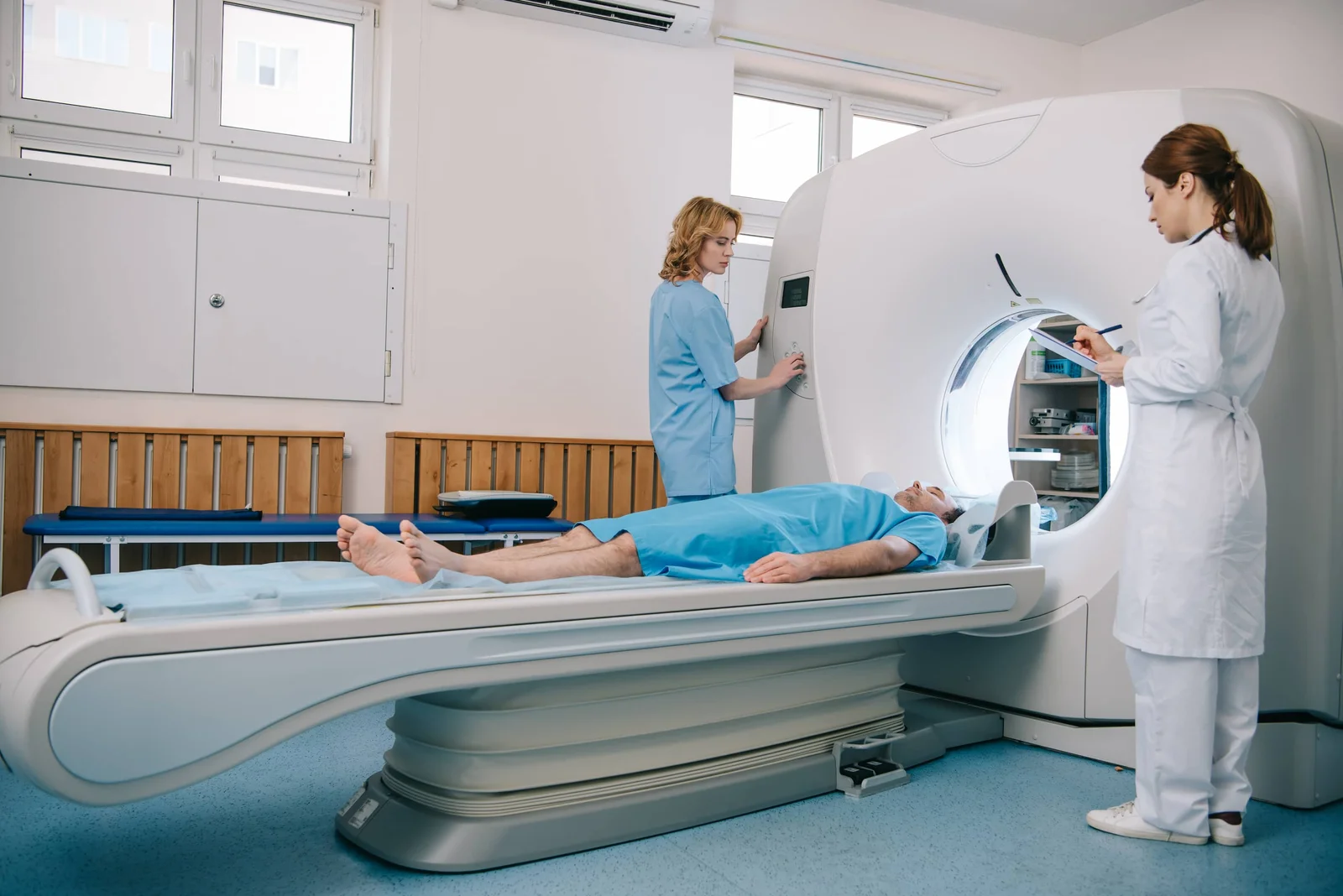
When the patient finally underwent a vital MRI scan of the spine, the imaging revealed a stark and highly distressing reality: the pain was emphatically not caused by a muscle spasm, a slipped disc, or poor posture. It was a spinal tumour.
For over 14 months, the patient had been enduring worsening symptoms—and actively stretching a spine severely compromised by cancer—because no baseline imaging was performed to rule out serious pathology. This highlights the absolute necessity of the “diagnose first, treat second” philosophy.
How to Assert Your Clinical Needs: Asking for an MRI Scan
If you have been undergoing physical therapy for several weeks without meaningful improvement, or if you are presenting with “red flags” (such as pain that awakens you at night, progressive weakness, or pain untouched by movement change), it is perfectly reasonable to pause and demand imaging.
A dedicated, collaborative clinician will never be offended by a patient seeking diagnostic certainty. A private MRI scan London scan provides an undeniable, safe roadmap for your ongoing rehabilitation. You can efficiently frame the conversation collaboratively:
- “I have been doing the exercises diligently, but the swelling and locking are still there. Do you think a private MRI scan would help us see if there is a structural block?”
- “I want to make absolutely sure we are targeting the right tissue before we proceed. Would you support me getting a scan with a musculoskeletal radiologist?”
Why Proper Imaging Alters Patient Pathways
MRI and high-resolution ultrasound do exponentially more than simply “confirm pain.” They dictate the entire future shape of your recovery direction accurately. They can clarify which specific tissue is involved, how massive the injury truly is, whether there is a mechanical cause for symptoms, and whether rehabilitation should definitively continue, be modified, or be paused instantly in favour of surgical intervention.
The value of imaging is not simply the physical scan itself; it rests entirely on the clarity it immediately brings to the next critical step of your patient journey.
At LSRI, establishing that absolute diagnostic baseline is what we do. Our Consultant Radiologist, Dr Prashant Sankaye, operates on the principle that the patient deserves absolute clarity. You have the right to self-refer for advanced imaging and take immediate control of your own healthcare timeline. Do not drift in clinical uncertainty—find out exactly what is wrong today, and put yourself on the true pathway to recovery.

About the Author: Dr Prashant Sankaye, Consultant Musculoskeletal specialist and Radiologist, MBBS, MS, FCPS, MRCS, CCBST, FRCR, PGCE(Med), FHEA, PGDip Sports and Exercise Medicine
Dr Prashant Sankaye is a highly respected Consultant MSK Radiologist and the Clinical Director of London Sports & Rheumatology Imaging (LSRI). With over a decade of sub-specialty experience, he is a recognized expert in advanced diagnostic imaging (Ultrasound & 3T MRI) and precision ultrasound-guided therapeutic injections. His authoritative approach ensures patients avoid surgery where possible and receive the highest standard of orthopaedic, rheumatological, and sports medicine care.