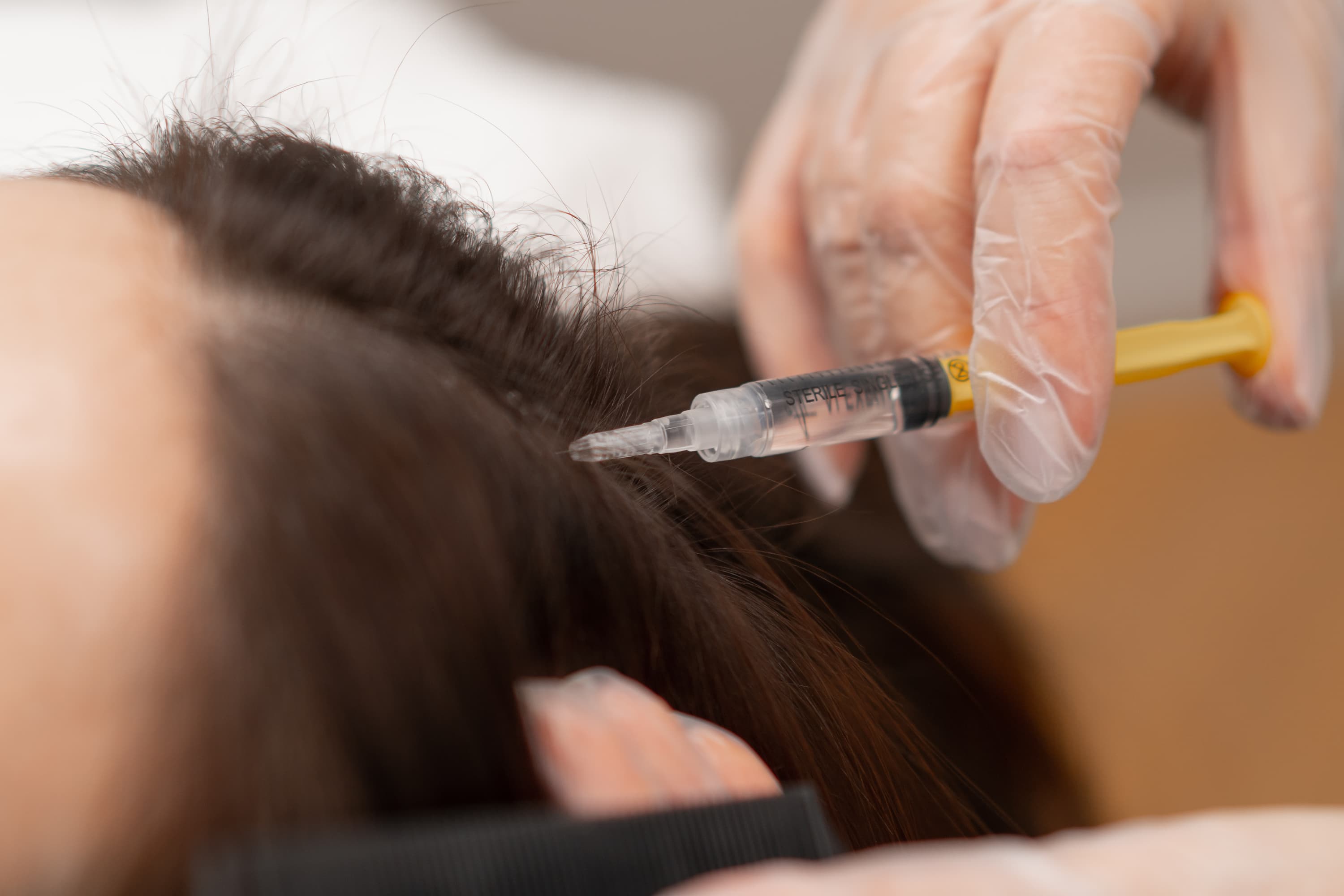
Platelet-Rich Plasma (PRP) Injections

Platelet-Rich Plasma (PRP) Injections

Harness your body's natural healing power to repair damaged tissues, reduce inflammation, and relieve pain.

Advanced regenerative treatment ideal for joint, tendon, and muscle injuries.

45-60min
Procedure Time
1-3 days
Recovery
4-6 weeks
Results Onset
6-12 months
Duration
Regenerative Medicine

What is PRP?

Platelet-Rich Plasma (PRP) is a concentrated form of your own blood plasma that contains 3-5 times the normal number of platelets. These platelets are rich in growth factors and bioactive proteins that play a crucial role in tissue healing and regeneration.

When injected into injured or damaged tissue, PRP releases growth factors that stimulate and accelerate the body's natural healing process. This promotes tissue repair, reduces inflammation, and helps restore function.

Because PRP uses your own blood, there's virtually no risk of allergic reaction or rejection, making it a safe and natural treatment option.

Key Growth Factors in PRP

PDGF
Platelet-Derived Growth Factor - Promotes cell replication and tissue growth
TGF-β
Transforming Growth Factor - Stimulates collagen production
VEGF
Vascular Endothelial Growth Factor - Promotes blood vessel formation
EGF
Epidermal Growth Factor - Accelerates tissue regeneration
IGF
Insulin-like Growth Factor - Enhances tissue repair
Natural Healing

Why Choose PRP Therapy?

Advanced regenerative treatment with proven results

Natural Healing

Uses your own blood's healing factors

Regenerative

Stimulates tissue repair and growth

Safe & Proven

Minimal risk with extensive research

Long-Lasting

Sustained improvement over time

How PRP Treatment Works

Simple 4-step process from blood draw to healing

01

Blood Draw

Small blood sample taken from your arm

Similar to a routine blood test, we collect 30-60ml of your blood

02

Centrifugation

Blood processed to concentrate platelets

Spun at high speed to separate and concentrate healing factors

03

Preparation

Platelet-rich plasma extracted

Pure PRP containing 3-5x normal platelet concentration prepared

04

Injection

PRP injected into injured area

Ultrasound-guided precise delivery to target tissue

Conditions We Treat with PRP

Effective for a wide range of musculoskeletal injuries

Knee osteoarthritis
Tennis elbow (lateral epicondylitis)
Golfer's elbow (medial epicondylitis)
Rotator cuff injuries
Achilles tendinopathy
Plantar fasciitis
Patellar tendinopathy
Hip labral tears
Chronic tendon injuries
Ligament sprains
Muscle strains
Joint degeneration

Your Healing Journey

What to expect during your PRP recovery timeline

Immediate

Mild soreness at injection site

1-2 Weeks

Initial healing response begins

4-6 Weeks

Noticeable improvement in symptoms

3-6 Months

Maximum therapeutic benefit achieved

Clinical Evidence & Research

Backed by extensive scientific research and clinical studies

PRP therapy has been extensively studied and shown to be effective for various musculoskeletal conditions. Research demonstrates significant improvements in pain reduction, function, and tissue healing.

Research Highlights

  • Knee Osteoarthritis: Studies show PRP provides superior pain relief and functional improvement compared to hyaluronic acid injections, with effects lasting 6-12 months
  • Tennis Elbow: Research demonstrates 70-80% improvement in pain and function, with better long-term outcomes than corticosteroid injections
  • Rotator Cuff: Clinical trials show accelerated healing and improved shoulder function in partial tears and tendinopathy
  • Achilles Tendinopathy: Evidence supports significant pain reduction and return to activity in chronic cases
  • Safety Profile: Extensive research confirms minimal adverse effects with proper preparation and injection technique

"PRP represents a paradigm shift in regenerative medicine, offering patients a natural, safe, and effective alternative to surgery for many musculoskeletal conditions."

— Journal of Orthopaedic Research, 2024

Frequently Asked Questions

Everything you need to know about PRP therapy

PRP (Platelet-Rich Plasma) is a concentrated form of your own blood plasma containing 3-5 times more platelets than normal blood. These platelets release growth factors that stimulate tissue healing, reduce inflammation, and promote regeneration. When injected into injured tissue, PRP accelerates your body's natural healing process.
Most patients experience minimal discomfort. We use local anesthetic to numb the injection site before the PRP is administered. You may feel slight pressure during the injection, but it should not be painful. Some patients experience mild soreness for 1-3 days after treatment, which is a normal part of the healing response.
PRP works by stimulating natural healing, so results develop gradually. Most patients begin noticing improvement within 4-6 weeks, with maximum benefit typically achieved at 3-6 months. The healing process continues over time, and results can last 6-12 months or longer depending on the condition being treated.
The number of injections varies depending on your condition and response to treatment. Many patients achieve significant improvement with 1-2 injections. Some conditions may benefit from a series of 2-3 injections spaced 4-6 weeks apart for optimal results. Your specialist will create a personalized treatment plan based on your specific needs.
PRP is very safe because it uses your own blood, eliminating the risk of allergic reactions or disease transmission. Common side effects are minimal and may include temporary soreness, mild swelling, or bruising at the injection site. Serious complications are extremely rare when performed by experienced specialists using proper technique.
PRP is ideal for patients with chronic tendon injuries, osteoarthritis, ligament sprains, or muscle strains who haven't responded well to conservative treatments. It's particularly beneficial for those wanting to avoid surgery or seeking a natural healing approach. Your specialist will evaluate your condition to determine if PRP is right for you.
You should rest the treated area for 24-48 hours after injection. Most patients can return to light activities within 2-3 days. Avoid strenuous exercise or heavy lifting for 1-2 weeks. Your specialist will provide specific activity guidelines based on your treatment area and condition. Gradual return to full activity is typically recommended over 4-6 weeks.
PRP and steroid injections work differently. Steroids provide quick anti-inflammatory relief but are temporary (6-12 weeks) and don't promote healing. PRP stimulates actual tissue regeneration for longer-lasting results (6-12 months) but takes longer to work. For chronic conditions or when long-term healing is desired, PRP is often the better choice.
Insurance coverage for PRP varies by provider and policy. While some insurers are beginning to cover PRP for certain conditions, many still consider it investigational. We recommend checking with your insurance provider. Our team can provide detailed documentation to support your claim. Self-pay options are also available.
Before treatment: Avoid NSAIDs (ibuprofen, aspirin) for 1 week as they can affect platelet function. Stay well-hydrated. After treatment: Avoid NSAIDs for 2 weeks to allow the healing process to work. Avoid strenuous activity for 1-2 weeks. You can use ice for comfort, but avoid heat for the first week. Follow all post-treatment instructions provided by your specialist.

Ready to Harness Your Body's Healing Power?

Discover how PRP therapy can help you heal naturally and get back to the activities you love.

Chat with us on WhatsApp