Written by: LSRI Editorial Team
Medically Reviewed by: Dr Prashant Sankaye, Consultant MSK Radiologist — MBBS, MS, FCPS, MRCS, CCBST, FRCR, PGCE(Med), FHEA, PGDip Sports and Exercise Medicine
Last Updated: October 8, 2026
Read Time: 10 Minutes
Outside-of-knee pain. Lateral hip pain. Tight IT band. Weak glutes. ITB syndrome and gluteal tendinopathy are extremely common issues that cause confusion for athletes.
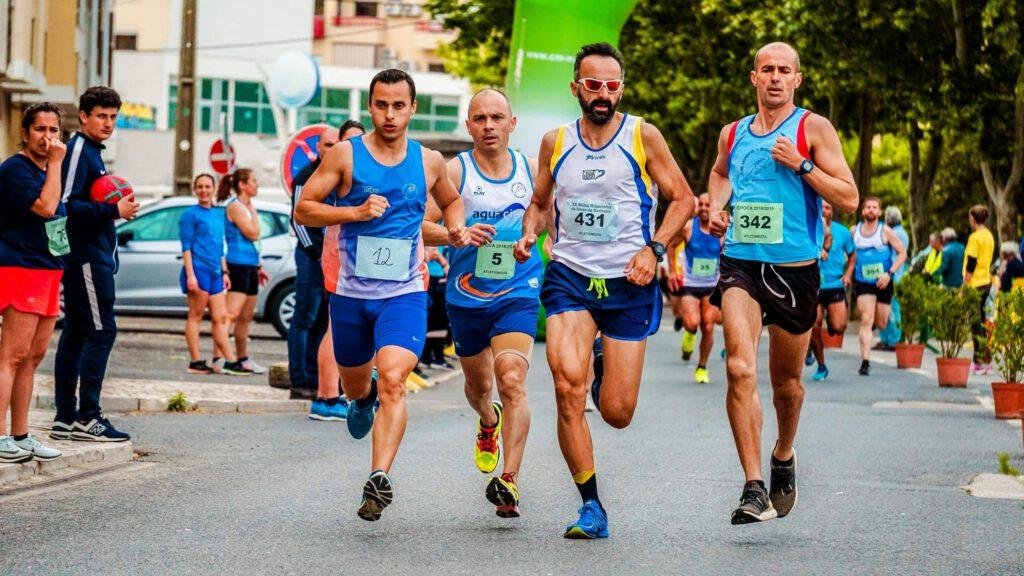
If you are a runner or triathlete, you have probably heard all these phrases – and perhaps been told you have iliotibial band (ITB) syndrome or “glute weakness” without anyone ever showing you what is actually happening inside your tissues.
At LSRI, LondonSportsImaging, HarleyStreetScan and ScanNearMe, we see the same pattern repeatedly:
Months of foam rolling and stretching an “IT band” that is not the real problem.
Lateral hip pain labelled as “trochanteric bursitis” when the main pathology is gluteal tendinopathy.
Runners told to “loosen the IT band” when research shows that the band itself is a tough, non-contractile structure that does not simply lengthen on a roller.
Our ethos is the same across all these conditions: diagnose first, then treat the right structure. This article explains why.
What is the iliotibial band – and what is ITB syndrome?
The iliotibial band is a long, strong band of connective tissue running down the outside of the thigh from the pelvis to just below the knee.
It originates from the tensor fascia lata (TFL) and gluteus maximus muscles near the hip, then blends into the fascia over the lateral thigh and inserts into the upper tibia (Gerdy’s tubercle).
Its main role is to provide lateral stability to the hip and knee during walking, running and single-leg stance.
Distal ITB syndrome (the classic “runner’s knee”) occurs when the ITB repeatedly rubs or compresses against the lateral femoral condyle just above the knee, causing pain on the outer side of the knee, especially when running downhill or after a certain distance.
MRI typically shows high-signal fluid and soft-tissue changes between the band and the femur, while the menisci and ligaments remain normal.
Proximal ITB problems around the hip are less well-known. Runners may experience pain at the outer hip or iliac crest, often with MRI changes at the origin of the TFL and proximal ITB – sometimes called proximal ITB enthesopathy or proximal ITB syndrome. These cases are easily confused with gluteal tendinopathy.
What is gluteal tendinopathy?
Gluteal tendinopathy is the most common cause of persistent lateral hip pain, more common than isolated “trochanteric bursitis”.
It typically involves tendinopathy or partial tearing of the gluteus medius and/or gluteus minimus tendons where they attach to the greater trochanter of the femur. (Often part of the umbrella term Greater Trochanteric Pain Syndrome, GTPS).
Key clinical features include:
- Pain over the outer side of the hip, often radiating down the lateral thigh.
- Pain lying on the affected side, climbing stairs, walking uphill or standing on one leg.
- Marked tenderness when pressing over the greater trochanter.
- Frequently worse in middle-aged women, but also seen in runners and hikers of all genders.
MRI and ultrasound commonly show tendon thickening, increased signal, partial tears and associated bursal fluid, and studies suggest that gluteal tendon pathology is a frequent cause of GTPS in people referred for imaging.
Why ITB syndrome and gluteal tendinopathy are so often misdiagnosed
Lateral hip and knee pain are easy to label and hard to diagnose without imaging. There are several reasons runners are frequently mis-managed. In fact, distinguishing ITB syndrome and gluteal tendinopathy correctly is critical.
Everything becomes “ITB tightness”
The ITB is often blamed whenever the outside of the knee or hip hurts, yet imaging and anatomical studies show that gluteal tendinopathy, proximal ITB enthesopathy and other conditions are common in this region.
Foam rolling a rigid fascial band does not meaningfully change its length, and there is no strong evidence that ITB “tightness” alone causes gluteal tendinopathy.
GTPS is still called “trochanteric bursitis”
Older terminology focused on inflammation of the bursa, but modern imaging studies show that non-inflammatory tendinopathy of the gluteus medius/minimus is usually the primary pathology.
This matters because long-term management of a tendon problem is not the same as management of a simple bursitis.
Clinical tests are imperfect
Lateral hip pain provoked by lying on the side, resisted abduction or single-leg stance can point towards gluteal tendinopathy, but there is overlap with referred pain from the lumbar spine, sacroiliac joint or proximal ITB.
Without imaging, these conditions can be difficult to separate, leading to months of trial-and-error rehab.
Imaging is requested too late – or not targeted
Many runners endure months of lateral hip or knee pain with the diagnosis never being revisited. When imaging is finally ordered, the request is often “?trochanteric bursitis” or “?ITB tightness” rather than a clear question about specific structures.
At LSRI, we encourage referrers to be explicit: “Lateral hip pain – query gluteal tendinopathy vs proximal ITB enthesopathy vs bursitis” – so that MRI and ultrasound protocols are optimised.
The role of imaging – when to scan for ITB or gluteal problems
Not every runner with a short bout of lateral knee or hip soreness needs a scan. Many mild cases settle with sensible load management and good physiotherapy. But certain scenarios should strongly prompt diagnostic imaging:
- Lateral knee or hip pain persisting longer than 6–12 weeks despite evidence-based rehab.
- Night pain, pain lying on the affected side, or pain that is starting to affect walking rather than just running.
- Unclear diagnosis after a thorough physio or sports-doctor assessment – especially when there is doubt between lumbar spine, hip joint, gluteal tendon and ITB pathology.
- Failure to respond to a previous injection, shockwave or other targeted therapy.
- High-level runners where precise tissue diagnosis will significantly influence training and race planning.
Ultrasound and MRI both have important roles:
- Ultrasound offers dynamic imaging of the ITB, TFL and gluteal tendons, with high sensitivity and positive predictive value for gluteal tendon tears.
- MRI provides a comprehensive view of bone, cartilage, tendon, fat pads and bursae, and can grade gluteal tendinopathy severity and identify associated bursitis, stress reactions or labral pathology.
At LSRI, LondonSportsImaging and HarleyStreetScan, Dr Prashant Sankaye uses a combination of ultrasound and MRI, depending on the history and examination, to answer focused clinical questions – rather than simply confirming a label.
Through ScanNearMe, the same level of imaging expertise is available to runners and walkers across the UK.
Evidence-based treatment: ITB syndrome and gluteal tendinopathy
Load management and targeted exercise
For most runners, the foundation of treatment is education and exercise.
A 2025 systematic review of gluteal tendinopathy treatments found that exercise plus education has moderate-quality evidence for improving pain and function in both the short and medium term, and should be considered the core approach.
Programmes typically focus on:
- Reducing sustained hip adduction (e.g., crossing legs, sitting with knees together, side-lying on the sore hip).
- Progressive strengthening of the gluteus medius/minimus and lateral hip stabilisers.
- Step-wise return to impact load (walking, then running) under physiotherapist supervision.
Similarly, Iliotibial Band Syndrome is a common cause of pain and programmes emphasise gradual load changes, hip abductor strength and movement retraining rather than simply “stretching the band”. Both ITB syndrome and gluteal tendinopathy benefit from correct rehabilitation.
Injections and shockwave
In more persistent or severe cases:
- Corticosteroid injections can provide short-term relief for GTPS, but benefits often diminish over time and repeated injections risk tendon weakening.
- Platelet-rich plasma (PRP) has shown promising short-term functional benefits compared with corticosteroid in some trials of gluteal tendinopathy, although evidence is still evolving.
- Focused extracorporeal shockwave therapy (ESWT) has demonstrated good long-term pain relief in GTPS when combined with appropriate rehab, and recent systematic reviews of hip and pelvic tendinopathies support ESWT as a useful option for selected patients.
Crucially, all of these interventions work best when targeted at the correct structure – which is only possible with an accurate diagnosis.
How LSRI, LondonSportsImaging, HarleyStreetScan and ScanNearMe help
Our role is to provide clarity where symptoms and clinical tests alone are not enough.
At LSRI, LondonSportsImaging and HarleyStreetScan:
- We offer tailored MRI and ultrasound protocols for lateral hip and knee pain – including ITB friction, proximal ITB enthesopathy and gluteal tendinopathy.
- All studies are reported by Dr Prashant Sankaye FRCR, who has subspecialty expertise in sports, hip and knee imaging.
- Reports are written in clear, clinically actionable language for physiotherapists, sports physicians, orthopaedic surgeons and pain specialists.
Through ScanNearMe, runners and patients anywhere in the UK can:
- Book fast, affordable MRI and ultrasound at partner centres close to home.
- Access consultant-level reporting rather than generic descriptions.
- Share reports instantly with their chosen clinician for ongoing management.
Across all four brands, our principle is unchanged: diagnose first, then treat the right structure – never guess first and hope.
When should you push for imaging if you have “ITB pain” or lateral hip pain?
Consider asking for imaging – or self-referring through ScanNearMe – if:
- You have had ITB-type lateral knee pain or lateral hip pain for more than 6–12 weeks despite good physiotherapy.
- Pain wakes you at night, prevents you lying on the affected side, or is starting to limit normal walking.
- You have already had one or more injections or shockwave with minimal benefit and the diagnosis has not been revisited.
- Your symptoms localise to a small area (e.g., greater trochanter, iliac crest, lateral femoral condyle) and you want to know exactly which tissue is involved.
- You are an endurance athlete or runner heading into an important season and need a clear picture before ramping up training again.
- You are not asking for “extra” treatment – you are asking for the right diagnosis before committing to more rehab, injections or procedures.
FAQs – ITB syndrome, gluteal tendinopathy and imaging
Is all outer-hip pain gluteal tendinopathy?
No. Gluteal tendinopathy is the most common cause of persistent lateral hip pain, but other possibilities include proximal ITB enthesopathy, bursitis, referred lumbar pain, stress fractures and hip joint pathology. Imaging helps distinguish them.
Can a tight IT band cause gluteal tendinopathy?
Current evidence suggests gluteal tendinopathy is more about tendon overload and hip control than a “tight” IT band. Many people with gluteal tendinopathy actually have lengthened, not shortened, lateral hip tissues due to excessive hip adduction in everyday postures.
Do I always need an MRI, or is ultrasound enough?
Ultrasound is excellent for assessing gluteal tendons, bursae and superficial ITB structures, and can be used dynamically. MRI provides a more global view, including bone, cartilage and deeper structures. At LSRI and HarleyStreetScan, the choice depends on your history and examination – in many cases, both are complementary.
Will imaging change my treatment?
Yes. Knowing whether your main problem is distal ITB friction, proximal ITB enthesopathy, gluteal tendinopathy or something else determines which exercises, injections or shockwave protocols are most appropriate and how quickly you can return to running.
Can I book a scan directly, or do I need a GP referral?
Through ScanNearMe, many patients can self-refer for appropriate MSK ultrasound or MRI with clinical triage to ensure safety and the right test. Reports are shared with you and, if you wish, with your GP, physiotherapist or consultant.
Written for LSRI by Dr Prashant Sankaye FRCR, Consultant Musculoskeletal, Spine & Sports Radiologist and founder of ScanNearMe.