✍️ Written by: LSRI Editorial Team
🩺 Medically Reviewed by: Dr Prashant Sankaye, Consultant Musculoskeletal specialist and Radiologist, MBBS, MS, FCPS, MRCS, CCBST, FRCR, PGCE(Med), FHEA, PGDip Sports and Exercise Medicine
📅 Last Updated: March 30, 2026
⏱️ Read Time: 6 Minutes
When it comes to Exercise with Arthritis, an accurate diagnosis is the first and most critical step toward effective treatment. At LSRI London, we specialize in high-resolution imaging to ensure you receive the precise care your joints need.
Following a proper arthritis exercise guide is essential for protecting your joints while staying active. At LSRI, we believe exercise is joint medicine — but only when prescribed based on exactly what your imaging shows about your specific joint health.
Following a proper arthritis exercise guide is essential for protecting your joints while staying active. At LSRI, we believe exercise is joint medicine — but only when prescribed based on exactly what your imaging shows about your specific joint health.
It is a common myth that exercise “wears out” arthritic joints. In reality, the right kind of movement is the best medicine for joint health. The secret is knowing your joints’ current load tolerance, which we establish through precise imaging.
Impact vs. Mobility
We work with patients to tailor exercise regimes that prioritize joint mobility without high-impact stress. Strengthening the muscles around the joint—such as the quadriceps for the knee—acts as a natural shock absorber.
The Role of Support Injections
Sometimes, pain prevents patients from starting the very exercises they need. In these cases, we use cushioning injections like Hyaluronic Acid to provide enough relief to kickstart a rehabilitation program.
Expert Clinical Opinion: Dr Prashant Sankaye
“Exercise is joint nutrition. We use imaging to ensure you are not loading a “stressed” bone, but rather strengthening the supporting architecture.”
Why Exercise Is Non-Negotiable in Arthritis Management
It can feel counterintuitive to exercise when your joints are painful. But the evidence is unambiguous: physical inactivity accelerates articular cartilage degeneration, weakens the periarticular musculature that supports affected joints, increases systemic inflammatory markers, and significantly reduces quality of life. Exercise is not optional in arthritis — it is therapeutic medicine.
The critical caveat is specificity. Not all exercise is equal for all patients, and exercising through the wrong movements on a compromised joint can do genuine harm. This is precisely where a diagnostic imaging assessment adds enormous value before a physiotherapy programme is commenced.
Imaging-Guided Exercise Prescription
At LSRI, we use 3T MRI and musculoskeletal ultrasound to identify:
- The exact site and severity of cartilage damage — so that high-impact loading (running, jumping) can be avoided in critically thinned zones.
- Whether active synovitis is present — an inflamed joint requires a different loading protocol than a mechanically worn one.
- The integrity of surrounding tendons and bursae — often co-pathologies that modify safe exercise parameters.
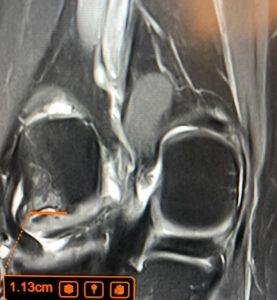
- Stress-reactive bone changes — bone marrow oedema on MRI is a warning sign that current loading levels are exceeding the bone’s adaptive capacity.
Armed with this information, physiotherapists and exercise specialists can design programmes that are genuinely safe and appropriately progressive — rather than generic protocols that may inadvertently worsen structural damage.
Best Exercise Modalities for Arthritic Joints
- Swimming and Hydrotherapy: Zero-impact cardiovascular exercise that maintains joint mobility and muscle strength without axial loading.
- Cycling: Low-impact lower limb strengthening with adjustable resistance. Effective for knee and hip OA.
- Resistance Training: Muscle strengthening reduces joint load by improving shock absorption. Must be initiated carefully in acute inflammatory conditions.
- Pilates and Tai Chi: Proven to improve balance, proprioception, and functional movement patterns — particularly valuable in older adults with multiple joint involvement.
- Walking: Underestimated as medicine. Consistent low-load walking maintains cartilage nutrition and reduces inflammatory markers over time.
Combining Exercise With Injection Therapy
For patients whose joint pain is limiting their ability to exercise, a course of ultrasound-guided injection therapy can break the cycle. Reducing acute inflammation or restoring synovial fluid quality through hyaluronic acid or Arthrosamid enables patients to re-engage with physical activity at therapeutic levels.
Ready to build an exercise plan that works for your specific joints? Book an assessment at LSRI and discover what your joints can actually tolerate.
Why Exercise Is Non-Negotiable in Arthritis Management
It can feel counterintuitive to exercise when your joints are painful. But the evidence is unambiguous: physical inactivity accelerates articular cartilage degeneration, weakens the periarticular musculature that supports affected joints, increases systemic inflammatory markers, and significantly reduces quality of life. Exercise is not optional in arthritis — it is therapeutic medicine.
The critical caveat is specificity. Not all exercise is equal for all patients, and exercising through the wrong movements on a compromised joint can do genuine harm. This is precisely where a diagnostic imaging assessment adds enormous value before a physiotherapy programme is commenced.
Imaging-Guided Exercise Prescription
At LSRI, we use 3T MRI and musculoskeletal ultrasound to identify:
- The exact site and severity of cartilage damage — so that high-impact loading (running, jumping) can be avoided in critically thinned zones.
- Whether active synovitis is present — an inflamed joint requires a different loading protocol than a mechanically worn one.
- The integrity of surrounding tendons and bursae — often co-pathologies that modify safe exercise parameters.
- Stress-reactive bone changes — bone marrow oedema on MRI is a warning sign that current loading levels are exceeding the bone’s adaptive capacity.
Armed with this information, physiotherapists and exercise specialists can design programmes that are genuinely safe and appropriately progressive — rather than generic protocols that may inadvertently worsen structural damage.
Best Exercise Modalities for Arthritic Joints
- Swimming and Hydrotherapy: Zero-impact cardiovascular exercise that maintains joint mobility and muscle strength without axial loading.
- Cycling: Low-impact lower limb strengthening with adjustable resistance. Effective for knee and hip OA.
- Resistance Training: Muscle strengthening reduces joint load by improving shock absorption. Must be initiated carefully in acute inflammatory conditions.
- Pilates and Tai Chi: Proven to improve balance, proprioception, and functional movement patterns — particularly valuable in older adults with multiple joint involvement.
- Walking: Underestimated as medicine. Consistent low-load walking maintains cartilage nutrition and reduces inflammatory markers over time.
Combining Exercise With Injection Therapy
For patients whose joint pain is limiting their ability to exercise, a course of ultrasound-guided injection therapy can break the cycle. Reducing acute inflammation or restoring synovial fluid quality through hyaluronic acid or Arthrosamid enables patients to re-engage with physical activity at therapeutic levels.
Ready to build an exercise plan that works for your specific joints? Book an assessment at LSRI and discover what your joints can actually tolerate.


About the Author: Dr Prashant Sankaye, Consultant Musculoskeletal specialist and Radiologist, MBBS, MS, FCPS, MRCS, CCBST, FRCR, PGCE(Med), FHEA, PGDip Sports and Exercise Medicine
Dr Prashant Sankaye is a highly respected Consultant MSK Radiologist and the Clinical Director of London Sports & Rheumatology Imaging (LSRI). With over a decade of sub-specialty experience, he is a recognized expert in advanced diagnostic imaging (Ultrasound & 3T MRI) and precision ultrasound-guided therapeutic injections. His authoritative approach ensures patients avoid surgery where possible and receive the highest standard of orthopaedic, rheumatological, and sports medicine care.