Skip to content
Arthrosamid Injections

Arthrosamid Injections

Available at LSRI Harley Street (W1G 9QJ) and LSRI Northwest London, Harrow (HA2 7SJ).

Revolutionary long-lasting pain relief for knee osteoarthritis. Proven hydrogel technology delivering sustained improvement for up to 5 years.

Single injection procedure with results lasting years—not months.

Why Choose Arthrosamid?

Advanced hydrogel technology for lasting knee pain relief

Proven Hydrogel Technology

20+ years of research and clinical evidence

Single Injection

One-step procedure under local anesthesia

Long-Lasting Relief

Pain reduction maintained up to 5 years

Safe & Effective

Treated 20,000+ patients worldwide

What is Arthrosamid?

Arthrosamid® is an injectable hydrogel used to treat knee pain caused by osteoarthritis. The gel is made mostly of water with a small amount of polyacrylamide, and it is given as a single injection into the knee joint.

Hyaluronic acid (gel) injections are gradually broken down by the body. Arthrosamid is different: it is designed to stay in the joint. After the injection it becomes part of the soft lining of the joint (the synovium), which is thought to cushion the joint and ease stiffness and pain.

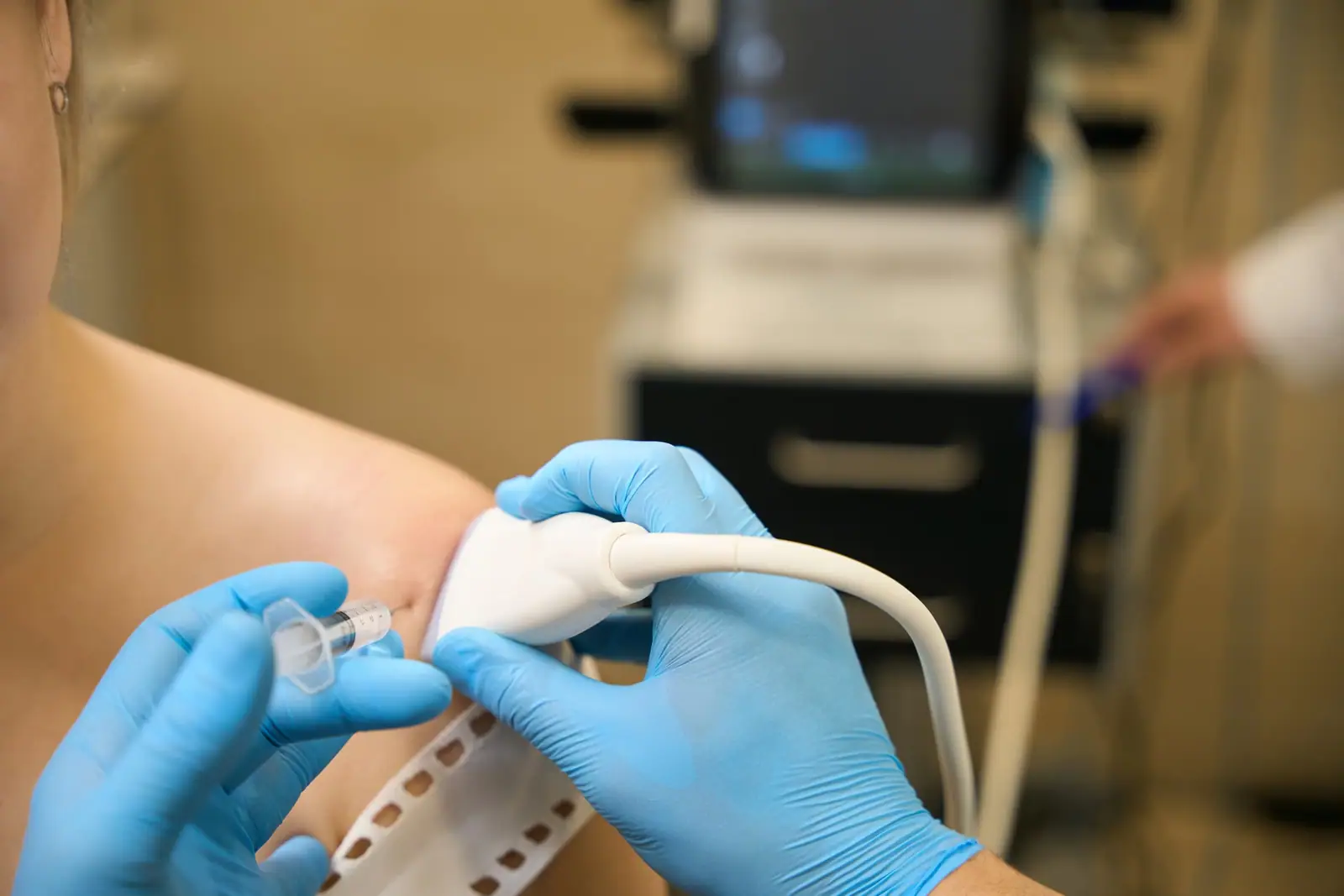
At LSRI the injection is given by Dr Prashant Sankaye, Consultant MSK Radiologist, using ultrasound to guide the needle so the gel is placed inside the joint.

Treatment Timeline

What to expect after your Arthrosamid injection

Week 1-2

Initial Response

Hydrogel integrates into joint, inflammation begins to reduce

Week 3-8

Progressive Improvement

Pain levels decrease significantly, mobility improves

Month 3-6

Peak Benefit

Maximum pain relief and functional improvement achieved

Month 6-60

Sustained Relief

Long-lasting pain reduction maintained for years

Who is Arthrosamid suitable for?

Arthrosamid is used for adults with knee osteoarthritis whose pain affects everyday life. It is often considered when exercise, weight management, painkillers or other injections have not given enough relief, or when you would like a non-surgical option.

Before recommending it, Dr Sankaye reviews your symptoms, medical history and any recent X-ray or MRI, and scans your knee with ultrasound. The lists below are a guide; the decision is made together with you at your consultation.

Ideal Candidates

  • Mild to moderate knee osteoarthritis
  • Seeking non-surgical treatment
  • Want long-lasting pain relief
  • Looking to delay or avoid knee replacement
  • Active lifestyle you want to maintain
  • Failed or limited response to other treatments

Not Suitable If

  • Severe osteoarthritis (Grade IV)
  • Active joint infection
  • Allergy to polyacrylamide
  • Bleeding disorders
  • Pregnant or breastfeeding
  • Recent knee surgery

What happens on the day

  1. ConsultationDr Sankaye goes through your symptoms, previous treatments and scans, explains the procedure and its risks, and answers your questions before you decide.
  2. Ultrasound assessmentYour knee is scanned with ultrasound to check the joint and plan the injection.
  3. PreparationThe skin is cleaned and a local anaesthetic is used to numb the area.
  4. The injectionUsing ultrasound to guide the needle, the gel is injected into the knee joint. The procedure itself usually takes 15–20 minutes.
  5. Going homeYou can go home the same day. Dr Sankaye will explain your aftercare and any follow-up before you leave.

Recovery and aftercare

  • You can usually walk out of the clinic and return to normal daily activities straight away.
  • Avoid strenuous exercise, running and heavy lifting for the first 2–3 weeks, then build up gradually.
  • Mild pain, swelling or stiffness in the knee for a few days is the most common side effect and is usually temporary.
  • Keep the injection site clean and dry for the rest of the day.
  • Dr Sankaye can advise on exercises or physiotherapy to support your knee.

Call us on 0203 633 5040, or get urgent medical advice out of hours, if your knee becomes hot, red, increasingly painful or swollen, or you feel feverish. These can be signs of infection, which needs prompt treatment.

Arthrosamid vs other knee injections

There are several injection options for knee osteoarthritis. The most suitable one depends on your symptoms, your scan findings and the treatments you have already tried.

  • Ultrasound-guided steroid injectionsReduce inflammation and are often used to settle a painful flare-up.
  • Hyaluronic acid (gel) injectionsSupplement the joint's natural lubricating fluid. The gel is gradually broken down by the body.
  • DurolaneA hyaluronic acid product given as a single injection.
  • PRP injectionsUse platelets prepared from a small sample of your own blood.
  • ArthrosamidA hydrogel given as a single injection and designed to remain in the joint.

Dr Sankaye can talk you through the options at your consultation. Call 0203 633 5040 to book.

Frequently Asked Questions

Find answers to common questions about Arthrosamid injections

How long does the Arthrosamid procedure take?
The procedure is quick and straightforward, typically taking 15-20 minutes under local anesthesia. You can return home the same day.
When will I feel pain relief?
Most patients experience initial improvement within 2-3 weeks, with peak benefits achieved by 3-6 months. Relief can last up to 5 years.
Is Arthrosamid safe?
Yes, Arthrosamid has been used for over 20 years with an excellent safety profile. Clinical trials show no serious side effects, with mild joint pain or swelling being the most common temporary effects.
Can I have the procedure repeated?
Yes, if needed, the procedure can be repeated. However, many patients experience long-lasting relief from a single injection.
What activities can I do after treatment?
You can resume normal activities immediately, but avoid strenuous exercise for the first 2-3 weeks to allow the hydrogel to fully integrate.
How does Arthrosamid compare to other knee injections?
Unlike temporary solutions, Arthrosamid provides long-lasting relief through a biocompatible hydrogel that integrates into the joint, offering sustained pain reduction for years.
Do I need a scan before an Arthrosamid injection?
Your knee is assessed before any injection. Dr Sankaye reviews any recent X-ray or MRI and scans the knee with ultrasound on the day to check the joint and plan the injection. If you need an X-ray or MRI first, we can arrange it at either of our clinics.
Is Arthrosamid an option if other knee injections have not helped?
It may be. Arthrosamid is often considered when steroid or hyaluronic acid injections have not given lasting relief. Dr Sankaye will review your history and scans and explain whether it is suitable for you.
Where can I have an Arthrosamid injection?
At LSRI Harley Street (The Harley Street Hospital, 19 Harley Street, London W1G 9QJ) and LSRI Northwest London (Medic Care Direct, 62 Station Road, Harrow HA2 7SJ). Call 0203 633 5040 to book at either clinic.

Our clinics

Two clinics, one team

Dr Prashant Sankaye, Consultant MSK Radiologist, sees patients at Harley Street in central London and at our Northwest London clinic in Harrow. Call one number to book at either clinic.

Ready to Reclaim Your Mobility?

Join thousands of patients who have experienced long-lasting pain relief with Arthrosamid. Schedule your consultation today.

  • Harley Street: Mon–Sat 9am–7pm, Sunday closed
  • Harrow: Mon–Sat 9am–6pm, Sunday 10am–1pm
Chat with us on WhatsApp