Written by: LSRI Editorial Team
Medically Reviewed by: Dr Prashant Sankaye, Consultant MSK Radiologist — MBBS, MS, FCPS, MRCS, CCBST, FRCR, PGCE(Med), FHEA, PGDip Sports and Exercise Medicine
Last Updated: September 26, 2026
Read Time: 6 Minutes
Lumps and Bumps Clinic London helps patients get rapid answers when they discover a new lump or swelling under the skin. While finding a lump can be worrying, many soft-tissue lumps are benign and can be assessed quickly with expert ultrasound imaging at LSRI. Dr Prashant Sankaye runs a dedicated service designed to identify common harmless lumps, flag any suspicious features, and guide the right next steps without delay.
What Is a Lumps and Bumps Clinic London Assessment?
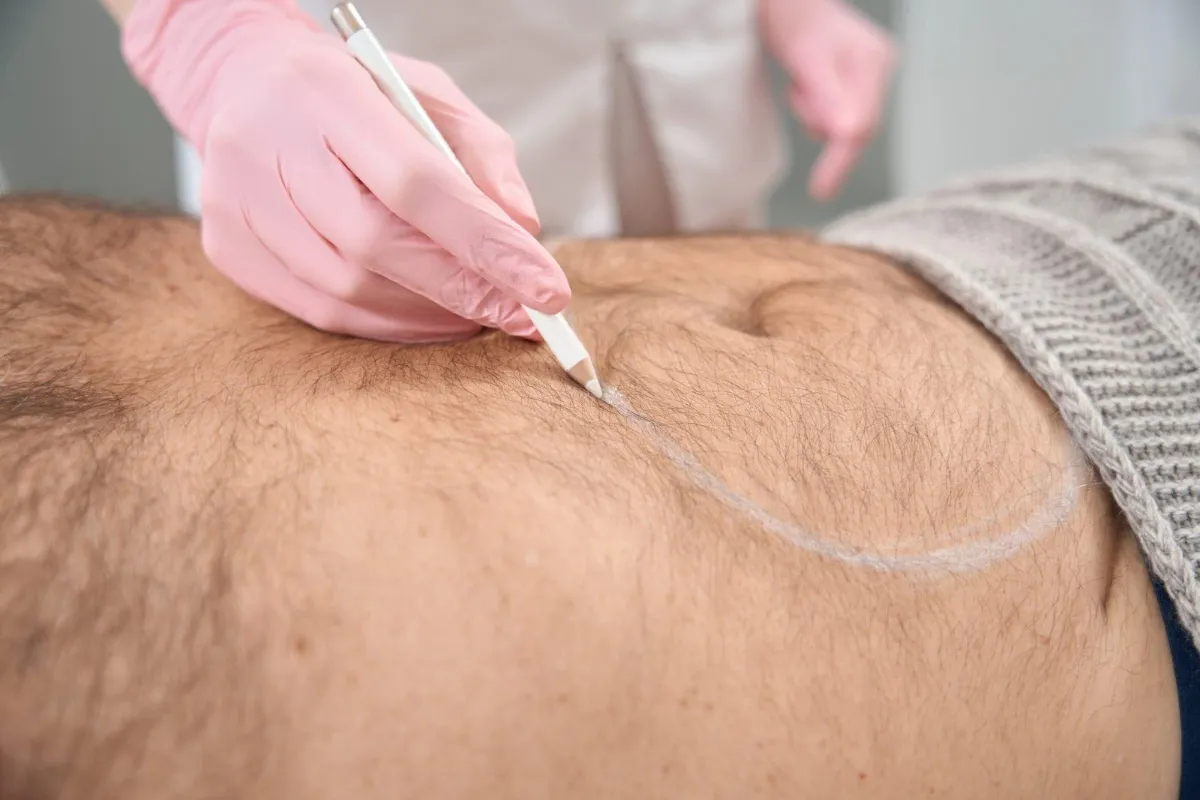
A Lumps and Bumps Clinic London appointment is designed to assess cutaneous and subcutaneous swellings using high-resolution ultrasound. This type of scan allows the doctor to examine the lump’s size, depth, borders, internal structure, and relationship to surrounding tissues. It also helps distinguish between fluid-filled lesions, fatty lumps, inflamed structures, and solid masses that may need further investigation.
At LSRI, the aim is not simply to scan the lump but to provide a clinically useful explanation of what it is likely to represent. That means patients leave with more than pictures; they leave with a clear plan.
Common Findings in a Lumps and Bumps Clinic London Visit
Many patients attending a Lumps and Bumps Clinic London service are found to have common benign conditions. These often include lipomas, which are soft fatty lumps beneath the skin, sebaceous or epidermoid cysts, which may feel firm or rounded, ganglion cysts around the wrist or hand, and enlarged lymph nodes related to infection or inflammation.
Some lumps are completely painless, while others become tender, inflamed, or uncomfortable with pressure. Ultrasound is particularly useful because it can often tell the difference between a harmless cyst and a lesion that needs closer review.
Why Ultrasound Is So Useful
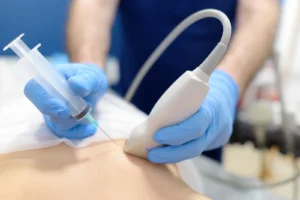
Ultrasound is one of the most practical first-line tests for superficial soft-tissue lumps because it is quick, non-invasive, and gives real-time information. During the scan, Dr Prashant Sankaye can assess whether the lump is cystic or solid, whether it has smooth or irregular margins, and whether it shows internal vascularity on Colour Doppler.
Blood-flow assessment is especially helpful. Benign lesions such as simple cysts or many lipomas often show little internal flow, while more complex lesions may need MRI or biopsy. This makes a Lumps and Bumps Clinic London scan valuable not just for reassurance, but for deciding what should happen next.
Ultrasound or MRI: Which Scan Do I Need?
At LSRI, lumps are investigated in a clear, step-by-step way:
- Ultrasound is the first test for superficial lumps. It shows straight away whether the lump is solid or fluid-filled, how much blood flow it has, and how it relates to the tissues around it.
- MRI is recommended for deep lumps, large lumps (over 5cm), or lumps with suspicious features on ultrasound. It maps the lump in detail and helps plan surgery if that is needed. See our private MRI scans page.
This approach follows the Royal College of Radiologists guidance on investigating soft-tissue masses, so you get the right scan without unnecessary delay.
When to Get a Lump Checked
You should consider booking a scan if a lump is growing, painful, hard, fixed in place, or causing anxiety because you do not know what it is. It is also sensible to arrange an assessment if the lump has changed shape, become inflamed repeatedly, or sits near a tendon, joint, or nerve.
A Lumps and Bumps Clinic London review is also useful when a lump interferes with daily life, catches on clothing, affects movement, or simply needs a proper diagnosis before treatment is considered.
7 Warning Signs Your Lump Needs Checking
Most lumps and bumps are harmless. However, any of the following signs means you should have specialist imaging rather than waiting to see what happens:
- The lump is larger than 5cm across
- It is growing quickly, for example doubling in size over 4 to 8 weeks
- It feels hard, firm or fixed, and does not move freely under the skin
- It sits deep, within or beneath the muscle
- It is painful, particularly at night
- The skin over it has changed: redness, warmth or ulceration
- It has come back after being removed before
According to NHS guidance, soft-tissue sarcomas (rare but serious cancers of the soft tissues) often show up as a painless lump that keeps growing. Early imaging makes a real difference, which is why the NHS runs an urgent 2-week-wait pathway for suspicious soft-tissue lumps. If your GP has referred you urgently, keep that appointment.
What Happens After the Scan
In many cases, patients can be reassured immediately that the lump appears benign and only needs observation. If the lesion is a ganglion cyst or a simple fluid-filled collection, drainage or guided treatment may sometimes be discussed on the same visit, depending on the clinical scenario.
If the lump shows atypical or suspicious features, the next step may be MRI for deeper characterisation or an ultrasound-guided biopsy for tissue diagnosis. The advantage of a Lumps and Bumps Clinic London service is speed: instead of waiting in uncertainty, patients get a focused specialist assessment and a clear recommendation.
Lumps and Bumps: Frequently Asked Questions
What kinds of lumps can be checked?
Most soft-tissue lumps and swellings, including cysts, lipomas, ganglions, swollen lymph nodes and other masses under the skin or in the muscles.
Do I need a referral?
No. A referral letter with your medical history is helpful, but you can contact LSRI directly to book a scan.
What happens during the scan?
Ultrasound and MRI are both non-invasive and painless. The scan is explained to you before it starts, and you can ask questions at any point.
How soon will I get my results?
Results are reported promptly and sent to you and, if you wish, your GP or referring doctor.
What if I need treatment afterwards?
If further tests or treatment are needed, such as a biopsy or a surgical opinion, LSRI will guide you to the right specialist.
Can I use my health insurance?
LSRI works with all major insurers. Check with your insurer about your cover before booking, or contact us and we will help.
Why Patients Choose LSRI
At LSRI, scans are interpreted in a musculoskeletal setting with attention to both anatomy and clinical relevance. Patients benefit from expert imaging, rapid access, and a plan that is easy to understand.
If you have found a new swelling and want clarity, booking a Lumps and Bumps Clinic London appointment is a practical way to get reassurance or prompt onward investigation without unnecessary delay.
To book, call 0203 633 5040 or book online.